
Vendor Onboarding Checklist for Denver Property Managers

Updated: Oct 5
A dependable maintenance vendor can help a property management team protect resident experience, control workflow and keep owners informed. The wrong fit can create repeated callbacks, unclear invoices and missed expectations. For Denver Metro and Boulder County portfolios, a written onboarding process gives every vendor the same operating rules before the first work order is assigned.
The goal is not to add paperwork for its own sake. It is to confirm that the vendor can safely enter occupied properties, communicate with residents and managers, document completed work and scale with the portfolio. Use the following steps as a practical framework, then adapt them to your company policies, insurer guidance and legal requirements.
Why a formal vendor onboarding process matters
Property managers coordinate urgent repairs, routine turns, preventive work and capital projects at the same time. A documented process reduces guesswork by defining who approves costs, how access is handled, what evidence closes a job and when an issue must be escalated. It also makes vendor performance easier to compare because every partner starts with the same expectations.
Local operating conditions add another reason to prepare. Front Range properties may face snow, rapid temperature changes, irrigation issues and seasonal demand spikes. A vendor should understand the service area, realistic response times and any building-specific constraints before those pressures arrive.
A seven-step vendor onboarding checklist
1. Define the service scope and coverage area
Start with a written list of the work you expect the vendor to perform. Separate routine maintenance, unit turns, emergency response and projects that require a licensed specialty trade. Confirm the cities, ZIP codes and property types the vendor can reliably cover. A clear scope prevents a vendor from accepting work that is outside its crew capacity or qualifications.
2. Verify business and insurance information
Collect the vendor's legal business name, contact details, tax documentation and certificate of insurance according to your company's requirements. Confirm expiration dates and create a reminder to request renewed documents. For regulated or specialty work, verify the appropriate license or credential with the relevant authority. Your insurer or legal adviser can help define the documentation your portfolio requires.
3. Agree on pricing and approval limits

Document labor rates, trip charges, material markups, minimum charges and after-hours pricing before assigning work. Set a not-to-exceed amount for routine jobs and require written approval when a repair will exceed it. Establish how estimates, change orders and unforeseen conditions are handled so the property manager and owner are not surprised by the final invoice.
4. Set access and resident-communication rules
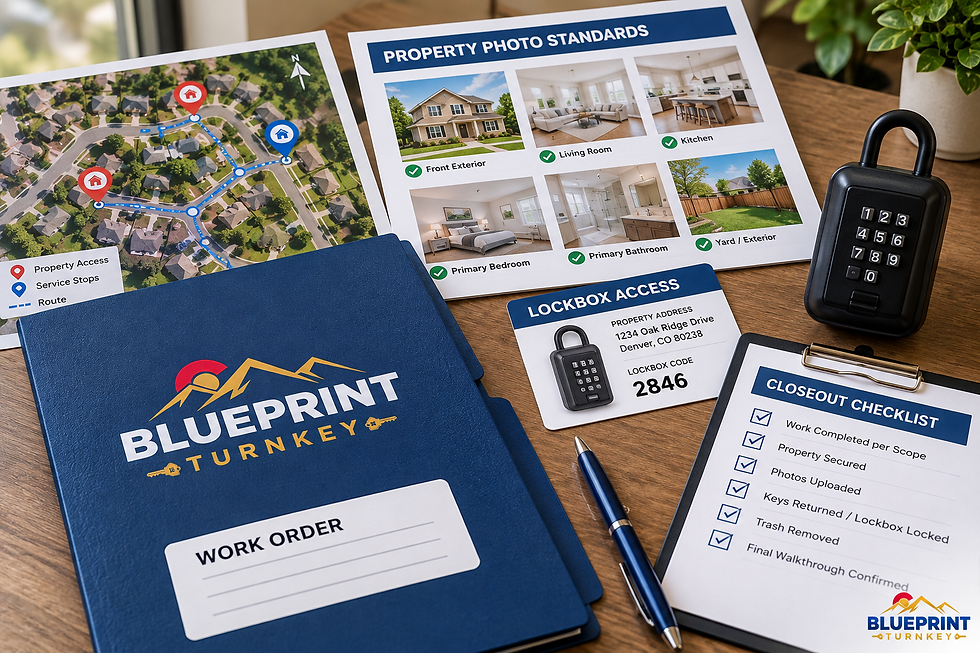
Explain how keys, lockboxes, access codes and occupied-unit appointments are managed. Vendors should know when to contact the resident, how much notice is expected and who to call if access fails. Define standards for identification, arrival windows, protection of belongings, cleanup and closing or securing the property when work is complete.
5. Standardize work-order communication
Choose one channel for receiving assignments and one source of truth for status updates. Each work order should include the property address, unit, issue, priority, access instructions and spending limit. Require the vendor to acknowledge receipt, report scheduling, flag delays and escalate safety concerns or additional damage instead of making assumptions in the field.
6. Require useful completion documentation
Define what 'complete' means. A strong closeout normally includes a plain-language summary, labor and materials, before-and-after photos when appropriate, resident or access notes and any recommended follow-up. Invoices should reference the property, unit and work-order number. Consistent records help managers answer owner questions and identify repeat maintenance patterns.
7. Test the relationship before expanding volume
Begin with a small number of representative work orders. Review response time, communication, workmanship, documentation and invoice accuracy. Give specific feedback and confirm whether the vendor can correct issues promptly. Expand the assignment volume only after the process works for both teams; a controlled start is safer than moving an entire portfolio at once.
Quick vendor onboarding checklist
Legal business name and primary contacts are recorded.
Insurance documents are current and meet company requirements.
Licenses or specialty credentials are verified when applicable.
Service categories, property types and geographic coverage are defined.
Rates, markups, trip charges and after-hours pricing are documented.
Routine spending limits and change-order approvals are clear.
Emergency definitions and escalation contacts are shared.
Access, resident communication and property-security rules are documented.
Work-order status expectations and response targets are agreed upon.
Photo, note and invoice requirements are standardized.
Payment terms and invoice submission procedures are confirmed.
A trial period and performance-review date are scheduled.
Warning signs to address early
Pause onboarding when a vendor will not provide required documents, gives vague pricing, resists written approvals or cannot explain how crews are supervised. Other warning signs include inconsistent scheduling updates, invoices without property references and repeated requests to work outside an agreed scope. One concern may be correctable, but a pattern usually signals an operational mismatch.
Frequently asked questions
What documents should a property manager collect from a maintenance vendor?
Common items include business contact information, tax documentation, a certificate of insurance and any licenses required for the assigned trade. Exact requirements vary by company, property and work type, so confirm them with your insurer, legal adviser and internal policy.
Should a new vendor receive emergency work immediately?
Usually, it is better to test communication and documentation on lower-risk assignments first. If emergency coverage is necessary, provide clear escalation contacts, approval limits and property-access procedures before the vendor is placed on call.
How often should vendor performance be reviewed?
Review performance after the initial trial and at regular intervals that fit your work volume. Track practical measures such as acknowledgment, scheduling, completion, callbacks, documentation and invoice accuracy. Also review insurance and licensing expiration dates separately.
Can one vendor support multiple properties across Denver and Boulder County?
Possibly, but coverage should be confirmed by city, property type, work category and expected volume. Ask for realistic response windows and a staffing plan. A vendor may be excellent in a smaller service area but less reliable when travel or demand increases.
Build a more dependable maintenance workflow
Blueprint Turnkey LLC works with property managers, landlords and owners on recurring maintenance, unit turns and property service needs across the Denver Metro and nearby Front Range. To discuss your portfolio, call 720-573-1756 or email workorders@blueprintturnkey.com. Share your property locations, approximate unit count and current maintenance priorities so the team can help identify a practical next step.

Comments