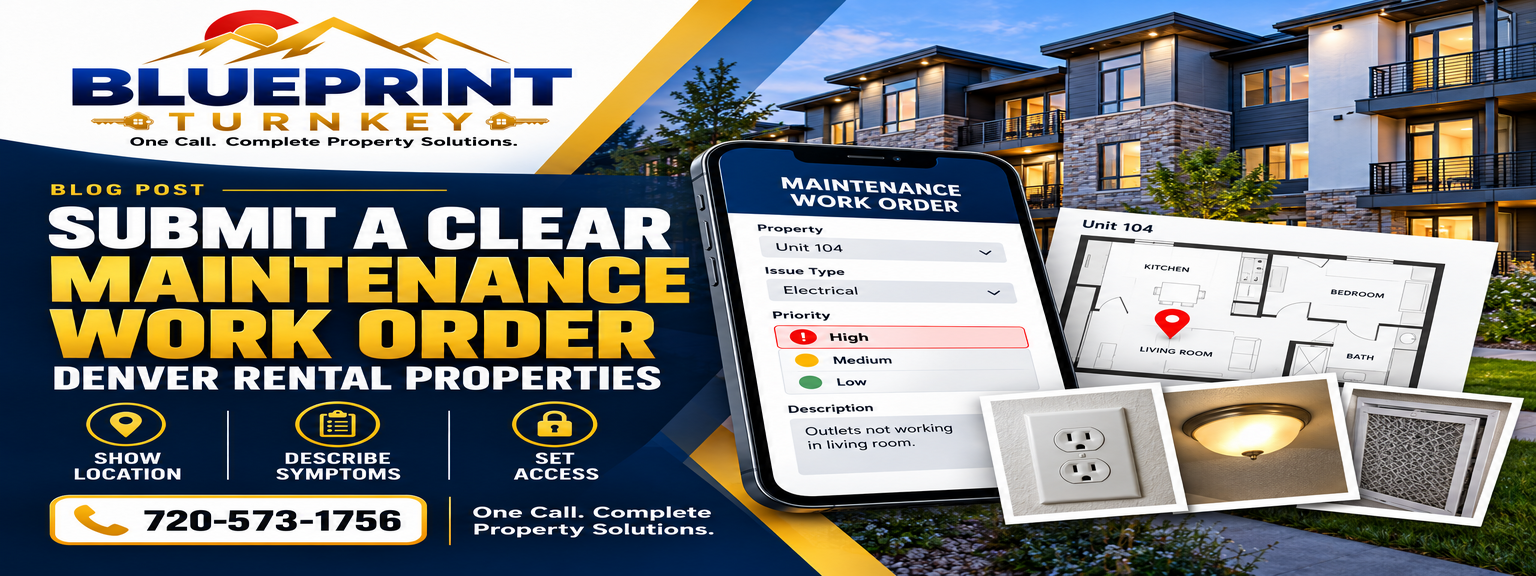
How to Submit a Clear Property Maintenance Work Order in Denver

Updated: Oct 5
Property managers and landlords move faster when a work order tells the service team exactly what is happening, what is approved, and how to get in. A complete request also reduces back-and-forth with tenants, owners, and technicians. Use this checklist for rental maintenance and unit turns in Denver Metro.
1. Describe the problem clearly
State what is wrong, where it is, when it started, and whether it is getting worse. “Water under the kitchen sink after the faucet runs” is more useful than “plumbing issue.” Identify the affected room, fixture, appliance, or unit. Add clear photos or a short video when available. Say whether the issue is active, intermittent, or already contained, and whether anyone has attempted a repair.
2. Give the property and unit details
Include the full property address, building and unit number, property type, and the number of bedrooms and bathrooms. For a unit turn, include the move-out date, target ready date, and whether the unit is occupied, vacant, or under leasing. This helps the team plan the right scope, crew, and access.
3. Additional items we can check and report
List any other concerns you want us to check, such as a nearby stain, a second leaking fixture, a damaged cabinet, or other punch-list items. We can inspect those additional items, document what we find, and report our recommendations to you. Tell us which items are approved for repair and which are inspection-only. We will request approval before work outside the authorized scope or amount.
4. Safety items we can check and report
Tell us about any safety concern you want us to check, such as standing water, an active leak, an electrical hazard, a failed lock, broken glass, no heat, or an unsafe stair or railing. We can assess accessible items within our scope, document the condition, and report findings and recommended next steps to you. Tell us what temporary steps have been taken and who is on site. If there is an immediate danger, contact emergency services or the appropriate utility first, then follow your property’s emergency procedure. Do not ask a tenant to operate equipment they are not trained or authorized to use.

5. Set a clear approval amount
Give the maximum amount authorized for diagnosis or repair, who can approve additional work, and the best phone number to reach that person. If you need an estimate first, say so. Specify whether the limit includes materials, trip charges, and tax under your company’s process. We will seek approval for work beyond the authorized scope or amount.
6. Provide the due date and scheduling window
State the date the work needs to be completed, not just “ASAP.” Include tenant availability, leasing or inspection deadlines, quiet hours, and any appointment restrictions. If the target date is flexible, say what is driving the priority so scheduling can be coordinated realistically.
7. Include internal and external contacts
List the property manager or coordinator, the person who approves costs, the tenant or onsite contact, and any building manager or concierge. Include names, phone numbers, preferred contact method, and who should receive scheduling updates and completion documentation. Share only the contact details needed to perform the work.
8. Explain access and shutoffs
Say whether access is by tenant appointment, lockbox, key, onsite office, gate, or concierge. Provide entry instructions through your approved secure channel, parking and loading instructions, pet information, alarm steps, and any notice requirement. Identify where the water shutoff, electrical panel or disconnect, gas shutoff, and other relevant controls are located, if known. Note who is authorized to operate them. If the location is unknown, say that so the technician can plan accordingly.
A work order you can copy
Property and unit: Full address, building/unit, beds/baths, occupied or vacant.

Problem: What is happening, exact location, when it began, photos/video, and current condition.
Additional items: Inspect-only items and separately approved repairs.
Safety: Hazards, active damage, containment steps, and urgency.
Approval: Authorized amount, whether an estimate is required, and approver contact.
Schedule: Due date, available access windows, and any leasing or inspection deadline.
Contacts: Manager/coordinator, tenant or onsite contact, and update recipients.
Access and utilities: Entry method, secure code or key process, pets, parking, notice, and known water/electrical/gas shutoff locations.
Closeout: Request completion photos, notes, recommendations, and invoice routing.
Ready to send a maintenance request or unit turn? Email workorders@blueprintturnkey.com with these details, or call 720-573-1756 to discuss the scope.

Comments